
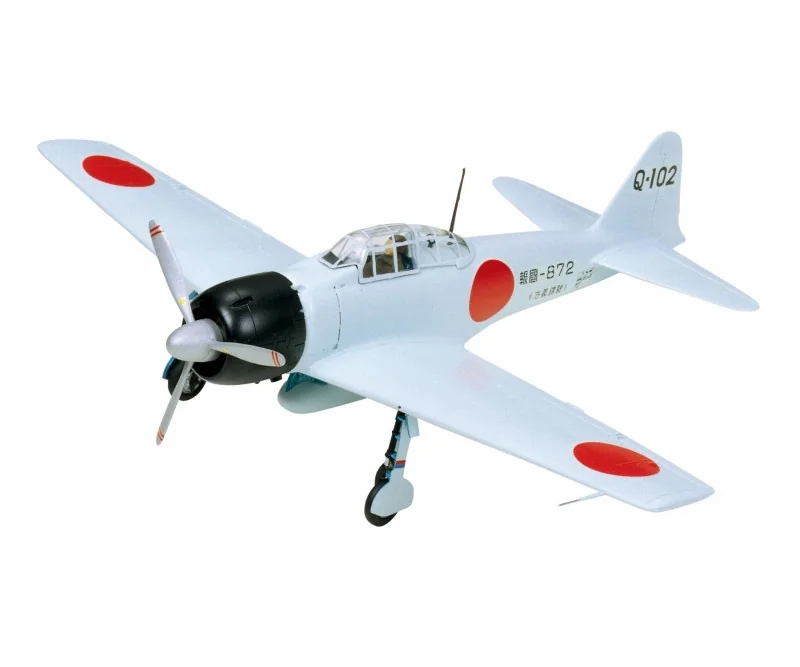
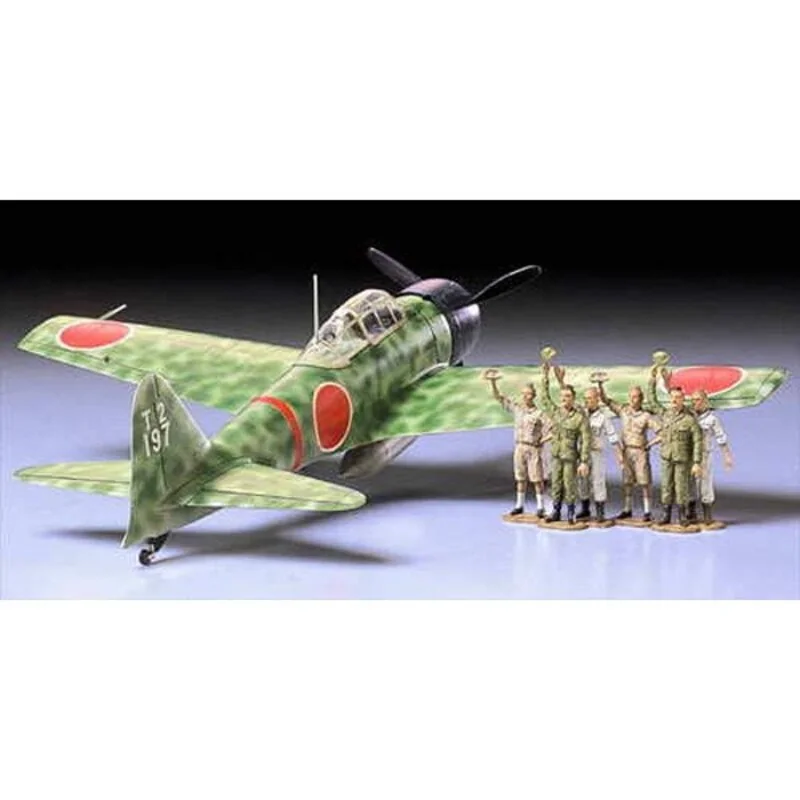
Tamiya Zero Type 32 Hamp 1:48 Model Kit
Original price was: $20.99.$14.69Current price is: $14.69.
- Service that stands out, online and always timely.
- Quality that lasts, prices that don't.
- Safe Payments, Secure Personal Information
- Efficiency meets excellence in customer care.

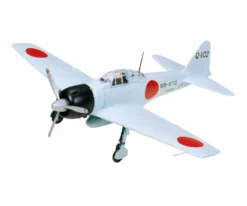
Aircraft model Zero Type 32 Hamp 1:48
Much has been written over the years about the Japanese Zero Fighter Aircraft series. Much was based upon hearsay and legend and little upon fact itself.
Even the Allied Forces and governments refused at first to acknowledge its existence, and when they did get a copy of it, they could hardly believe the performance it produced.
The prototype zero or A6M1 first took place on paper on January 17, 1938, following the Japanese request for a shipboard fighter with a top speed of 27o kph at 12000 ft 7 6-8 hours of cruise economy endurance and 1.5-2 hours at normal combat speeds.
Armament was to be two 20mm cannon and two 7.7mm machine guns plus the normal radio equipment and direction finding gear.
These specifications wee so far from the existing state of the art that the famous Nakajima Company dropped out of competition, stating that they were impossible to meet.
That left Mitsubishi Heavy Industries and their design team headed by Jiro Horikoshi the only company to tackle the problem.
First flight was on 1 April 1939 and combat trials were concluded in July 1940 with 15 pre-production A6M2’s sent to two squadrons by the end of the month.
These aircraft had folding wing tips to accommodate aircraft carrier elevators, and were the ones first seen by Gen.
Chennault in China, and at Pearl Harbor in December 1941. Although the A6M2 met or exceeded original design specifications, modifications were taking place at the Mitsubishi factory to improve roll rate, speed up handling aboard carriers, and utilize the uprated Sakae 21, 1,130 hp engine.
The first A6M3 type 32 (code named HAMP) took to the air on 15 July 1941 with production beginning in April 42. A total of 343 aircraft were produced by August 43, when the type 52 A6M5 began production.
The Type 32 Zero had the most radical change in the entire series and was readily recognized by its squared off wing tips.
This reduced total span to exactly 11 meters and eliminated the cumbersome folding tips which consumed time during combat to get the aircraft down carrier elevators.
The larger Sakae 21 engine gave the type 32 a better rate of climb and the shorter wing span (1 meter shorter) lessened stick forces and increased roll rate.
The Hamp was utilized throughout the war, but saw most of its service off of land based installations in the southern island chains of New Guinea and the Phillipines.
Scale : 1:48
The 1:48 scale is the queen size scale for model planes.
Military models are also available in this scale.
A model that is 1:48 scale is 48 times smaller than the real object.
For example, a model airplane in the 1:48 scale measures 13 inches / 31.25 cm long if the real object is 15 m (1500 cm).
Type of product : Airplane model kit
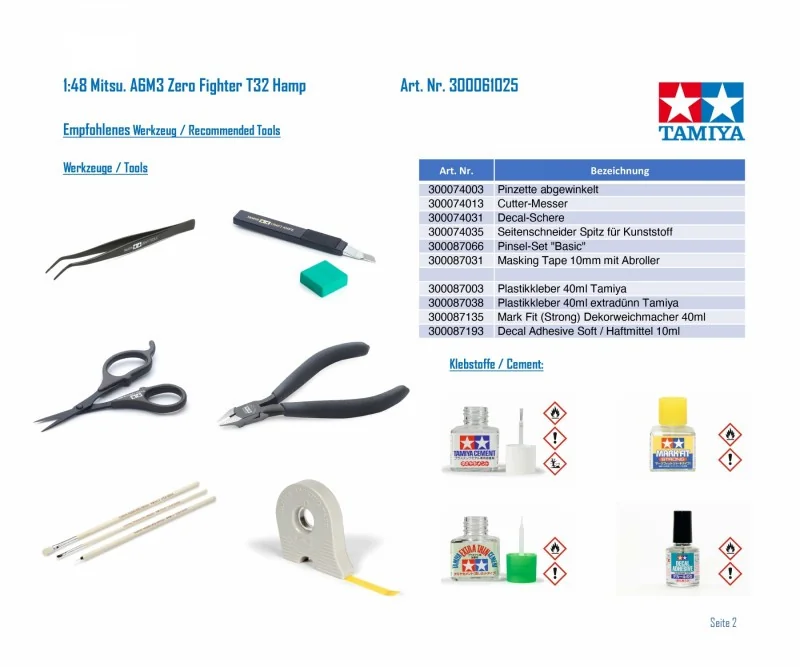
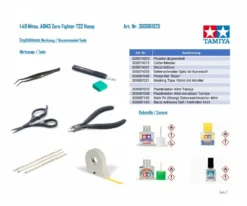
To build a plastic model airplane, you need the following tools:
– a cutter or cutting pliers
– and model glue.
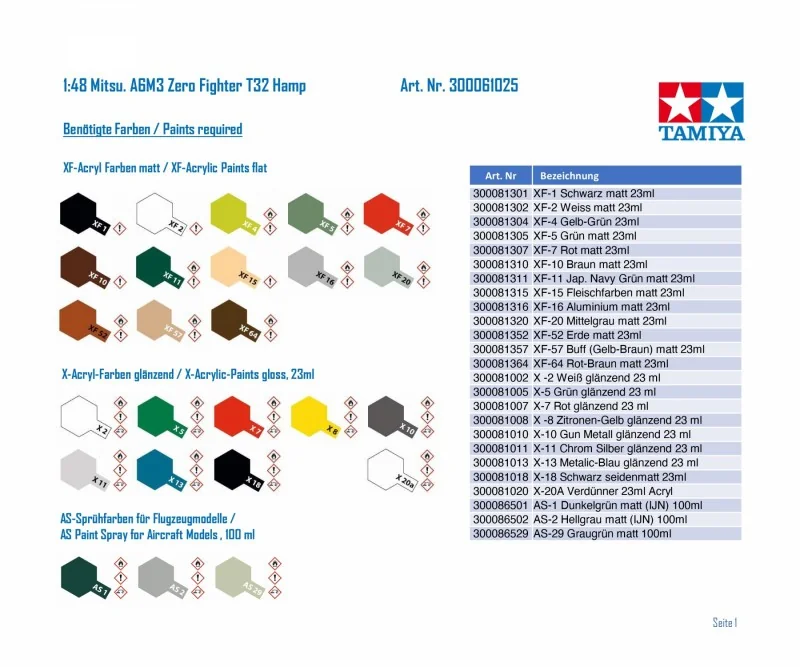
You can also paint the model with a brush (acrylic or enamel paint).
The model consists of different parts to cut and assemble.
Construction time will vary depending on the number of parts.
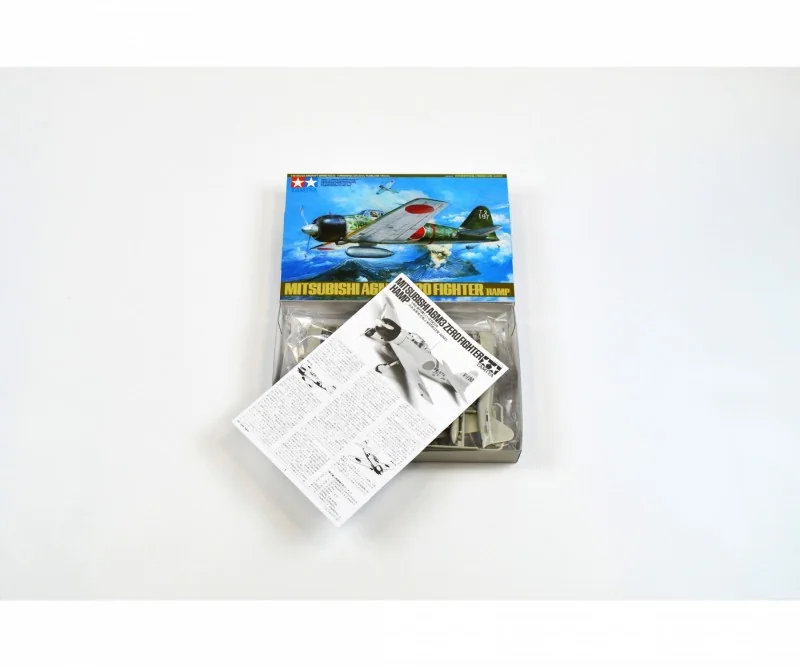
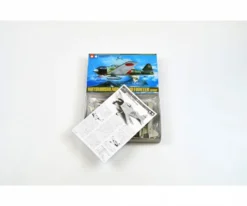
An instruction manual is provided for you inside the box.
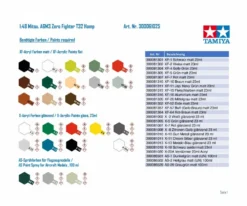
Paint and glue : To be bought separately
The tools, paints and glue are not provided.
You can see our selection with the essential glues and paints or the full range..
Size of the model (inches) : 7.5 x 9.0
To learn more about size and scale, click here.
Reference : 61025
Other tags : TM61025 – TM6125 – 61025 – 6125 – TAM-61025 – TAM-6125 – TAMI61025 – TAMI6125 – TA61025 – TA6125 – 6125
Airplane model kit – to be assembled and painted – Paint and glue to be bought separately
Scale : 1:48 –Box size : 29 cm x 19 cm x 4 cm
Tamiya
Tamiya: Specialties and Models
Tamiya is a Japanese brand founded in 1946. She is involved in the design and marketing of radio-controlled electric vehicles.
All you have to know about Tamiya
Who is the Tamiya manufacturer?
The Tamiya Incorporated brand was founded in 1946. It inherits the name of its founder: Yoshio Tamiya and is based in Shizuoka. The Japanese company specializes in construction sets for RC modeling . It has 4 subsidiaries and 60 branches. Its network extends to Hong Kong, the United States, and Germany.
What are Tamiya’s specialties?
15 years ago, the scale model manufacturer set up an ultra-modern production site on an area of 4 hectares in the Philippines. The brand thus has its own production line, from manufacturing to packaging. Tamiya RC has a highly qualified team in the following areas:
● The product development;
● 3D design;
● Mold making;
● The finish;
● Quality control.
The Tamiya catalog offers a combination of models for beginners and professionals, including:
● Plastic models;
● Ads models for educational purposes with batteries and solar energy;
● The acrylic paint model;
● The motorcycle model;
● So-controlled vehicles;
● Adadfly construction games;
● The models of sailing boats;
● A painting for modeling;
● The Tamiya Truck;
● The Tamiya glue;
● The Tamiya Connector;
● Accessories for model makers.
What sets Tamiya apart?
In December 1976, Tamiya debuted in the world of RC modeling with the RA1201 Porsche Turbo RSR kit. To design a realistic model, he invested in a Porsche 911 in order to reproduce it, but in miniature.
The RC models of the brand have a good reputation acquired over the years. In fact, Tamiya fully deserves its title of “World Leader in Quality”. Its collection “heavy trucks and tracked cars” has been appreciated by fans of miniature models for two decades.
What are Tamiya models and their specifics?
RC vehicle enthusiasts will appreciate the return of the famous Tamiya grasshopper. More revolutionary than ever, this new model to mount appeals to both beginners and nostalgic for the first version. Indeed, two versions are now marketed, including the grasshopper and the grasshopper II.
These models come complete with the following:
● The engine;
● The drive;
● The propulsion battery;
● The servo;
● The radio controller.
Tamiya also markets other high-quality products:
● The tamiya 2cv ;
● The tamiya tt02;
● The tamiya tt01;
● The tamiya cc01;
● The tamiya putty ;
● The tamiya grasshopper 2 ;
● The Tamiya m05.
To bring more realism to your models, the Tamiya color chart launches :
● The Tamiya panel line: this range accentuates panel lines and other details.
● The tamiya bomb paint match: Specially dedicated to plastic models, it has a wide selection of colors of very good quality.
Learn more about Tamiya
| Brand | Tamiya |
|---|---|
| Reference | TAMI61025 |
| Type of product | Airplane model kit |
| Scale | 1:48 |
| Assembly | to be assembled and painted |
| Paint and glue | To be bought separately |
| Length (cm) | 7,5" / 19 |
| Era | World War II – 1939-1945 |
| Material | Plastic |
| Box size (cm) | 29 x 19 x 4 |
Be the first to review “Tamiya Zero Type 32 Hamp 1:48 Model Kit”
Related products
Military model kits
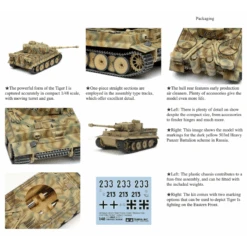
Tamiya Pz.Kpfw.VI Tiger I Early Production East Front Model Kit
Plastic model kits
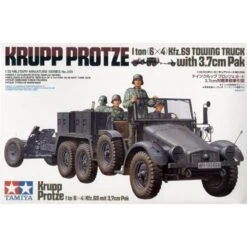
Tamiya Krupp Protze 1 Ton (6 X 6) Towing Truck With 37mm Pak Model Kit
1:48 aircraft scale models
Plastic model kits
1:700 scale ship models
1:48 aircraft scale models
1:35 military scale models
Reviews
There are no reviews yet.